Do you know where your sensitive data is?

Over time, this data has been copied, shared, downloaded, emailed and stored in multiple locations. Some of it is in approved repositories, but much of it may exist in unmanaged folders, old project directories, user desktops, archived files, email attachments or shared drives.
The organisation needs to understand where this sensitive information is located, who owns it, who has access to it, and whether it is being stored or shared appropriately.
The challenge
Most organisations do not have a complete view of where PII, medical and personal information resides. Sensitive data is often duplicated across systems, stored in legacy folders, attached to emails, saved locally by users, or shared externally without clear ownership.
This creates a major compliance and security risk. If the organisation cannot identify where sensitive information is stored, it cannot properly classify it, protect it, reduce exposure, or respond confidently to audits or privacy obligations. When a data breach occurs knowing what was stolen is also challenge and working from assumptions under pressure is exactly where organisations make costly mistakes.
In 2026 there is a new challenge AI assistants surface what you’ve left exposed. Copilot-style tools don’t understand sensitivity, they follow permissions and available content. If your sensitive data is over-permissioned, scattered, or unlabelled, AI can find it, summarise it, and redistribute it. Accidentally or on purpose. The question isn’t whether your people will use AI. They already are.
The Solution
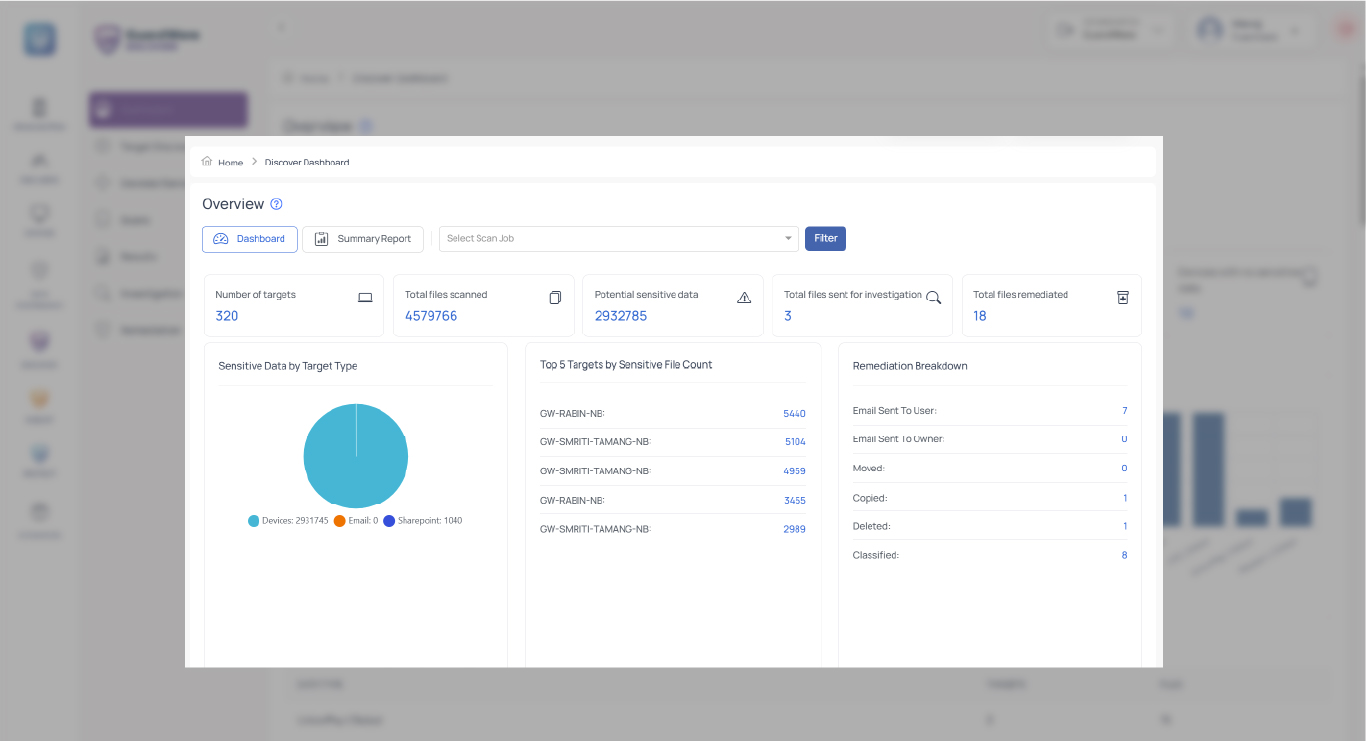
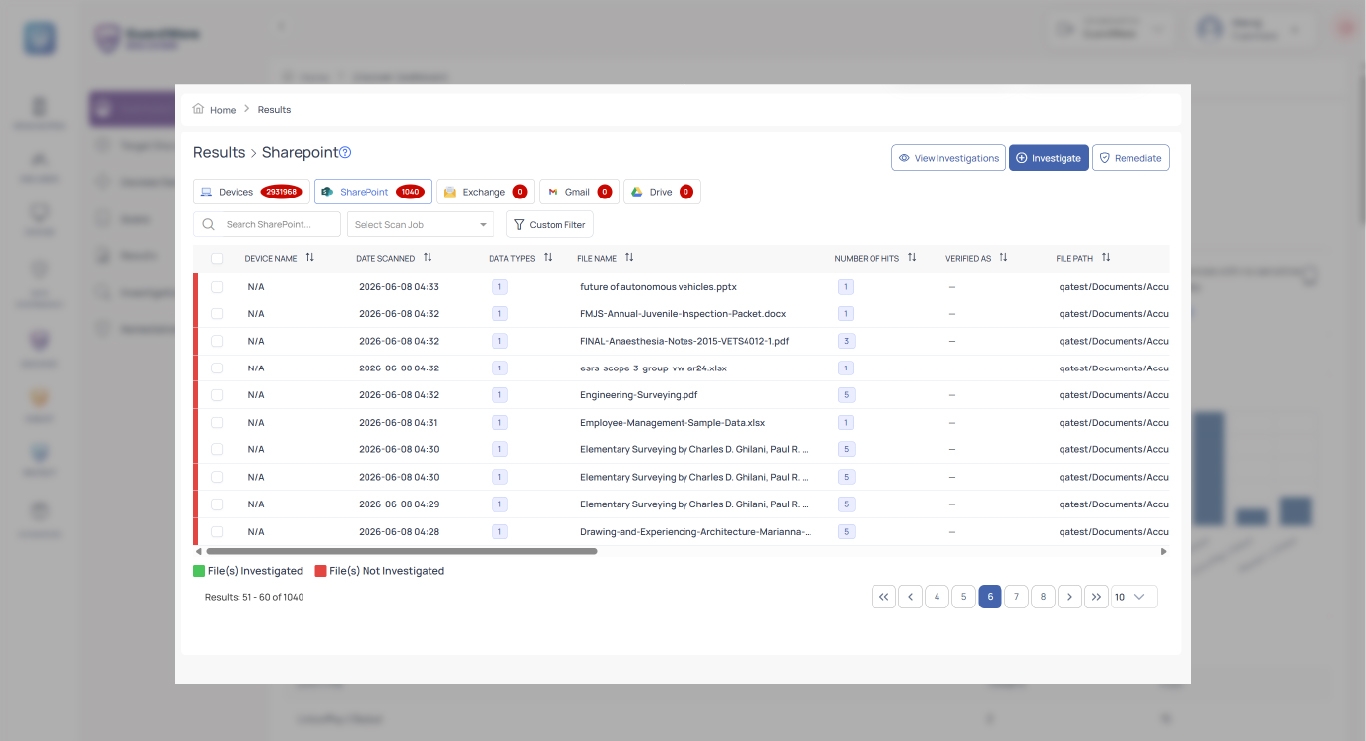
To meet this challenge, organisations can deploy GuardWare DISCOVER, a cross-platform data discovery and remediation solution that locates sensitive data across endpoints, file servers, email, SharePoint, OneDrive, cloud storage and shared repositories.
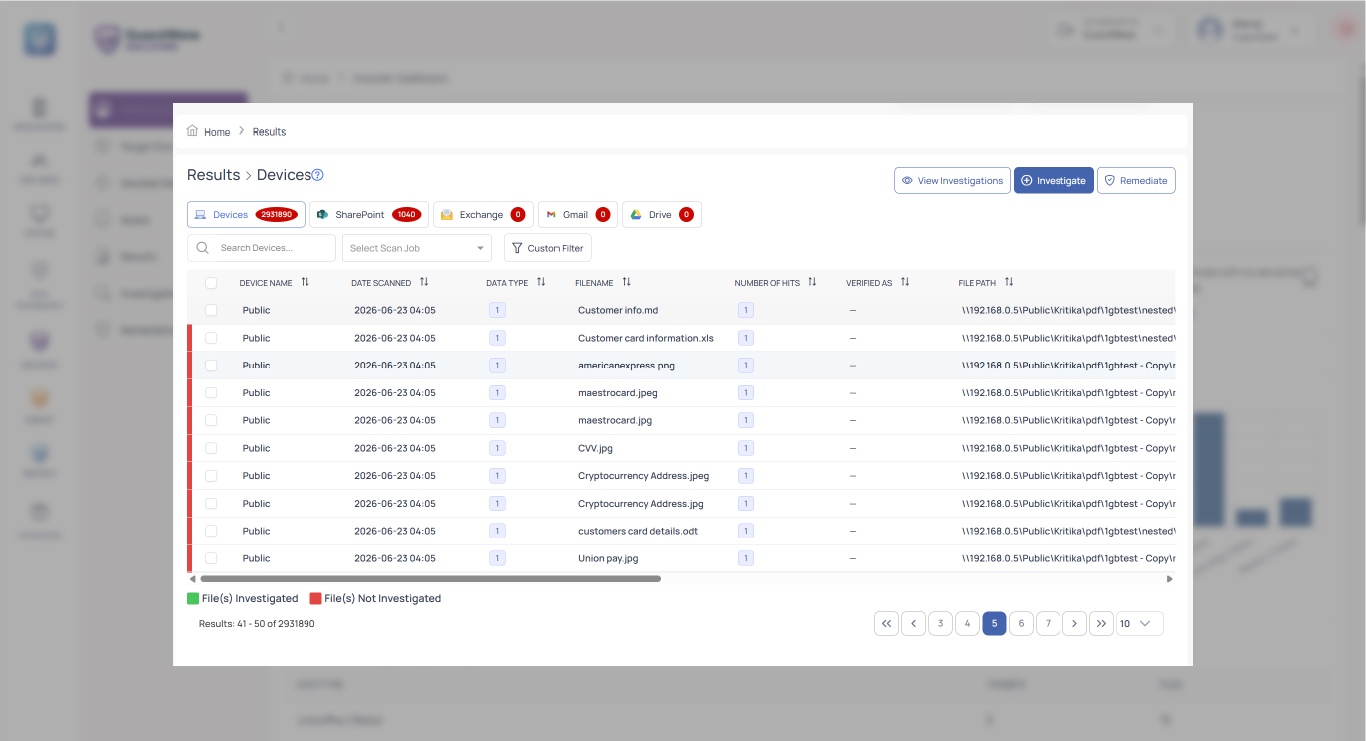
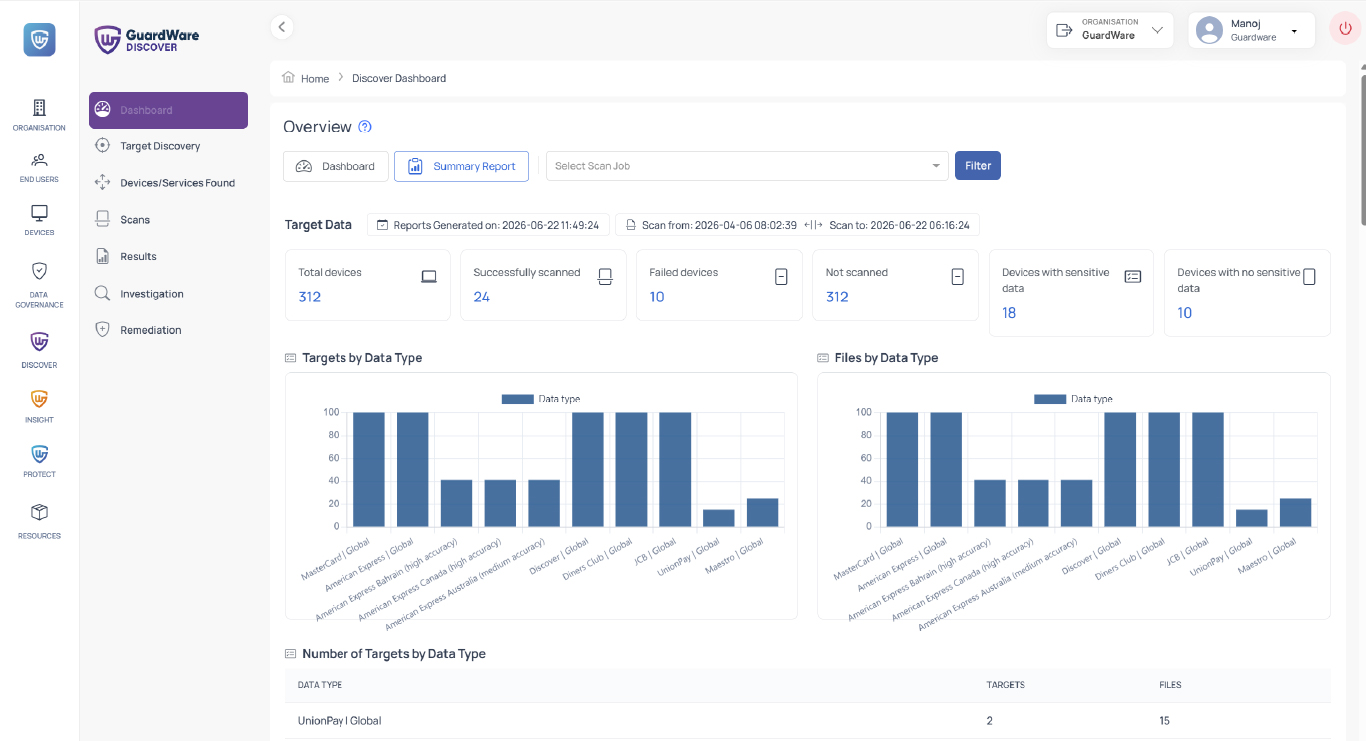
DISCOVER identifies PII, PCI, PHI, cardholder data, medical information and business-sensitive content. It supports agentless scanning, including standard files, archives, images and attachments. When sensitive data is found, DISCOVER can notify data owners for review or allow administrators to apply remediation actions such as moving, encrypting or deleting files.
Key capabilities include:
- Locating sensitive data across Microsoft 365, SharePoint, OneDrive, email, Windows, Linux, cloud platforms, file shares and legacy archives.
- Identifying, classifying and remediation of PII, PCI, PHI, cardholder data and business-sensitive content.
- Supporting agentless scanning to simplify deployment and remotely scan multiple systems in parallel.
- Keeping all scanning within the customer environment, with no data leaving the organisation.
- Running on the customer’s own VM to maintain control over data processing and security.
The Outcome
Running GuardWare DISCOVER gives the organisation a clear view of where sensitive data is stored, who owns it, who has access to it, and where it may be exposed. The business can reduce privacy and compliance risk by identifying PII, medical and personal information across approved systems and unmanaged locations. This enables faster remediation of misplaced, duplicated or overexposed data before it becomes a breach.
The outcome is improved data governance, stronger audit readiness, reduced breach exposure, and a practical foundation for classification, monitoring and protection of sensitive information
Try GuardWare Discover for yourself.
guardware.com · sales@guardware.com.au · +61-2 8551 8500