
-
Data-first security
Find where your sensitive data is and who can access it, before you’re breached.
The problem today is you still can’t say, with confidence, where sensitive data lives, what type of data it is and whether you keep it, move it to a secure location or delete it. That gap leads to lengthy incident work, difficult audit questions, and risky AI rollouts.
What if your data could stay protected, even after it leaves your environment?
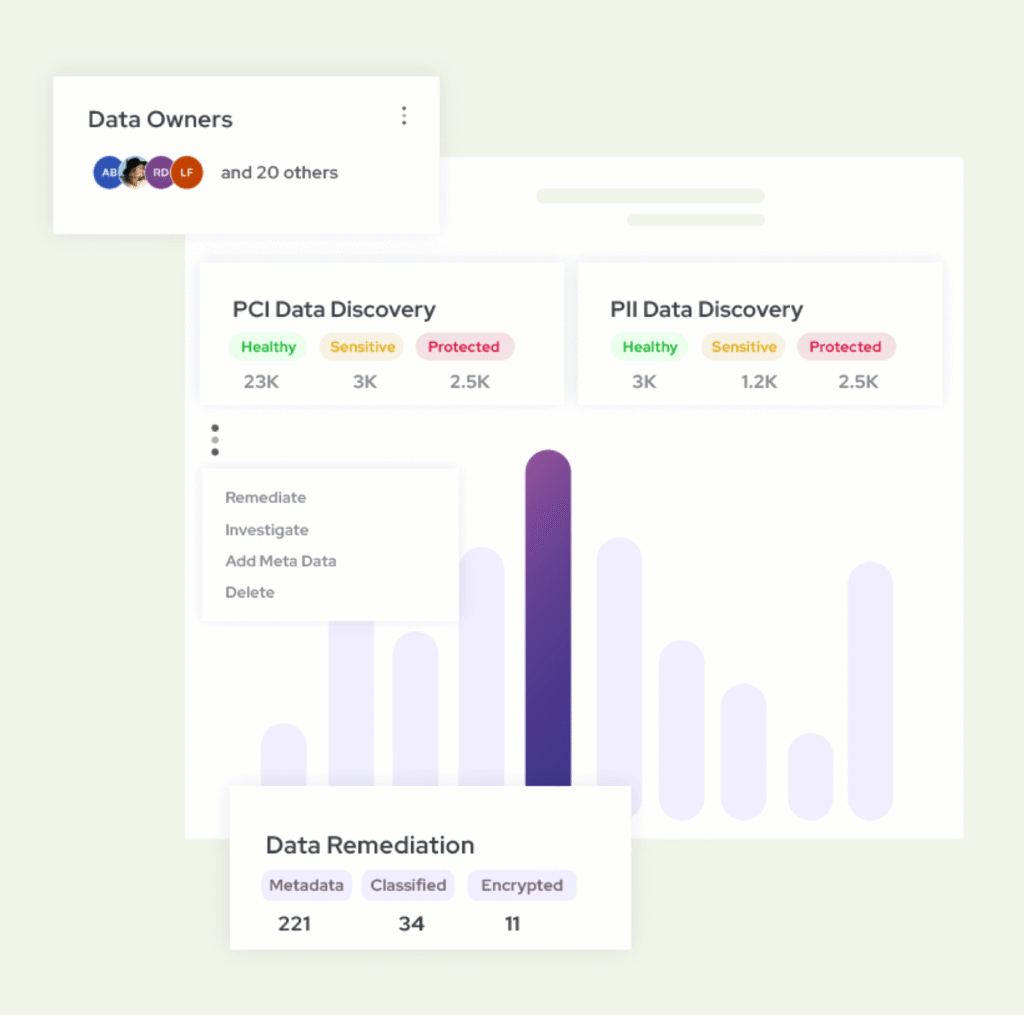
Start with a targeted data source and after 2 hours you will see sensitive data being surfaced.
GuardWare DISCOVER Proof of Value is a short, focused engagement designed to rapidly identify sensitive, regulated, and over-retained data in your environment.
Deployed in two hours, it gives you visibility into where sensitive and legacy data sits, how it is shared, and who has effective access.
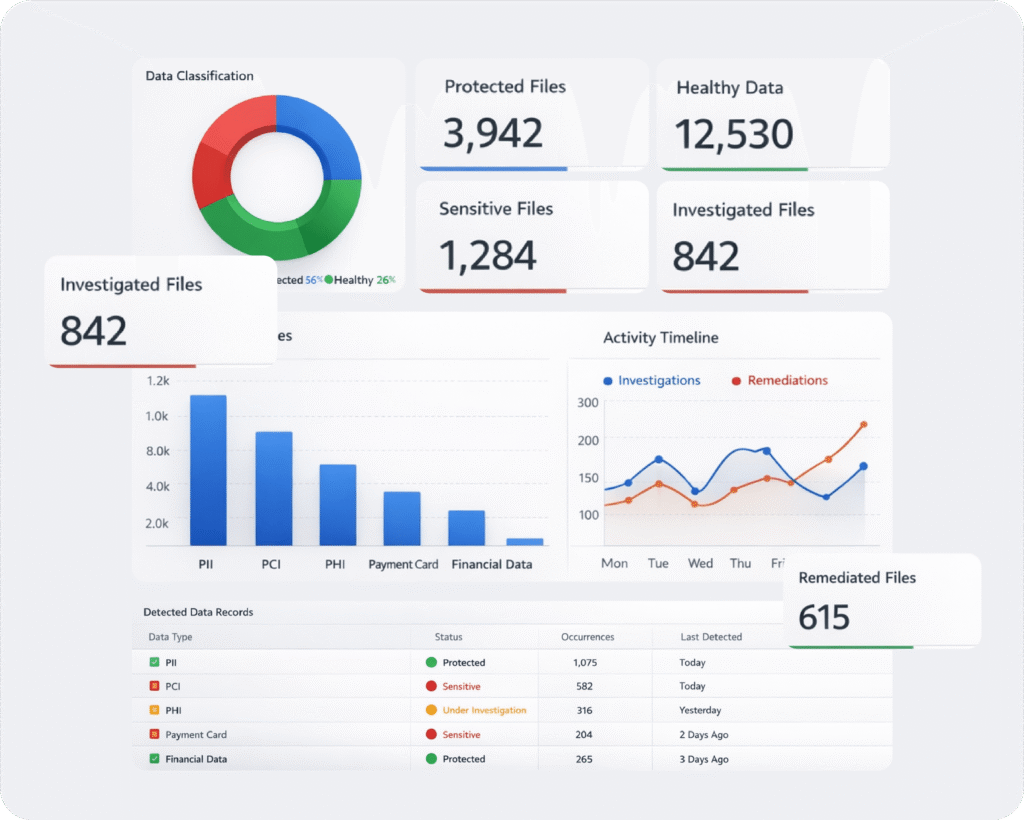
First results in 24 hours: you receive initial findings and a ranked exposure report with a practical remediation plan, so you can move high-risk data, tighten access, or safely delete information you no longer need.
UK GDPR and the Data Protection Act 2018 can apply significant penalties for serious failures, including up to £17.5m or 4% of global turnover for the most serious infringements.

You can’t control
what you can’t see
Sensitive information spreads across Microsoft 365, file shares, old archives, and supplier hand-offs.
Projects end, teams change, and access stays behind. Labels help, but they are rarely consistent. When pressure hits, the first question is simple: “Show me where it is.” If you can’t, everything slows down.
This isn’t about competence. It’s about volume and data sprawl. Unstructured data is the bulk of the risk: documents, designs, spreadsheets, and email attachments. Ownership is unclear, permissions drift, and evidence is hard to produce quickly.
AI doesn’t create the risk. It exposes what’s already there. Tools like ChatGPT and Copilot can only work with the data and permissions you’ve given them. If sensitive data is scattered or access is too broad, it will surface in the wrong context and be copied to the wrong places.
Why this matters for you
01 Financial Services
UK financial firms live under constant scrutiny. You have to show you can keep services running, protect customer data, and respond fast when something goes wrong. The data problem manifests day to day as customer records, complaints, call notes, reports, and pricing models spread across Teams, SharePoint, OneDrive, email, and shared drives. Over time, access drifts and nobody owns the clean-up.
DISCOVER Proof of Value gives you evidence: where the sensitive data sits, where access is too broad, and what to fix first.
02 Healthcare & Life Sciences
Patient information is high-impact, and mistakes go public quickly. Research and clinical data flow across partners and systems that don’t always align. Sensitive data can sit in documents, spreadsheets, images, and email attachments and gets copied into “temporary” locations that become permanent.
DISCOVER Proof of Value shows where it is, what it is, and who can see it, so you can reduce exposure with targeted fixes.
03 Legal & Professional Services
Client trust is the product. One leak can damage relationships built over years. The data challenge is familiar: contracts, bundles, discovery material, and reports spread across shared drives, email, document systems, and collaboration tools. Access gets messy because work moves fast.
DISCOVER Proof of Value identifies where sensitive client data sits, where access is too broad, and what to fix first.
Start with evidence, then choose the next step
Together, we agree on the scope first. Then DISCOVER produces a ranked exposure view and a prioritised remediation plan written so that Security, Risk, and leadership teams can act on it.

GuardWare DISCOVER Proof of Value, First Results in 24 hours
A scoped engagement across the repositories that matter most, with timing agreed to match your environment and volume.
What you’ll have in hand after the trial
Where sensitive data is concentrated (the locations that drive risk)
What types of sensitive data are present (including surprises)
What to remediate first - prioritised actions tied to risk
This is not a “nice to have report”. It’s the start of control.
How it works
First, we do a short call to confirm the scope. Then we complete the setup (typically around two hours, depending on the environment and access method). Next, we run discovery and classification across the agreed repositories. You receive an initial report that turns findings into priority actions.
Then you choose the next step: implement the fixes, expand the scope, or run a follow-on engagement.
FAQ
Is the Proof of Value a full deployment?
No. It is a scoped engagement designed to give you clear findings quickly. If you like what you see, you can move into implementation.
What does “results in 24 hours” mean?
It means you receive initial findings within 24 hours of the scan starting on the agreed scope. The readout session then turns those findings into a clear priority plan.
What do we need to provide to start?
A short call to confirm the scope, the repositories to scan, and the access method. We keep the request tight because the goal is speed and clarity.
Will you copy our data out of our environment?
We will scan the data in place on your system. If any transfer is required for a specific repository type, that is agreed upon up front, so you know what is happening.
Which systems can we include?
Most teams start with Microsoft 365 locations (SharePoint/Teams/OneDrive/email) and one “known messy” place like a file share or archive. The scope is agreed on the call.
What if we already use Microsoft tools for labels and DLP?
That’s common. The problem is usually coverage and drift. This Proof of Value is about showing what is really there and where exposure is growing, so your existing controls can be applied with more precision.
Book the call. Get answers in 24 hours.
If you want a clear view of where sensitive data sits and who can see it, start with the DISCOVER Proof of Value. You’ll get a ranked exposure view and a fix-first plan based on evidence, not assumptions.
How the Proof of Value runs
First, we do a short call to confirm fit and agree on the scope. Next, we run the scan and classification across the agreed repositories. You get results in 24 hours. Then we walk you through the findings and the priority actions, so you can decide the next step.